Guardrail Partners with Catalysis to Secure Onchain Risk Coverage Infrastructure
We're proud to announce our partnership with Catalysis, the first onchain infrastructure to natively integrate risk coverage into DeFi vaults.
What Catalysis is building
Catalysis connects restaked capital, risk underwriting, and DeFi vaults into a single onchain coverage flow. Instead of forcing institutional LPs to source external coverage from third-party protocols, Catalysis embeds programmable risk protection directly into vaults on Tier-1 DeFi protocols like Morpho and Nest Credit.
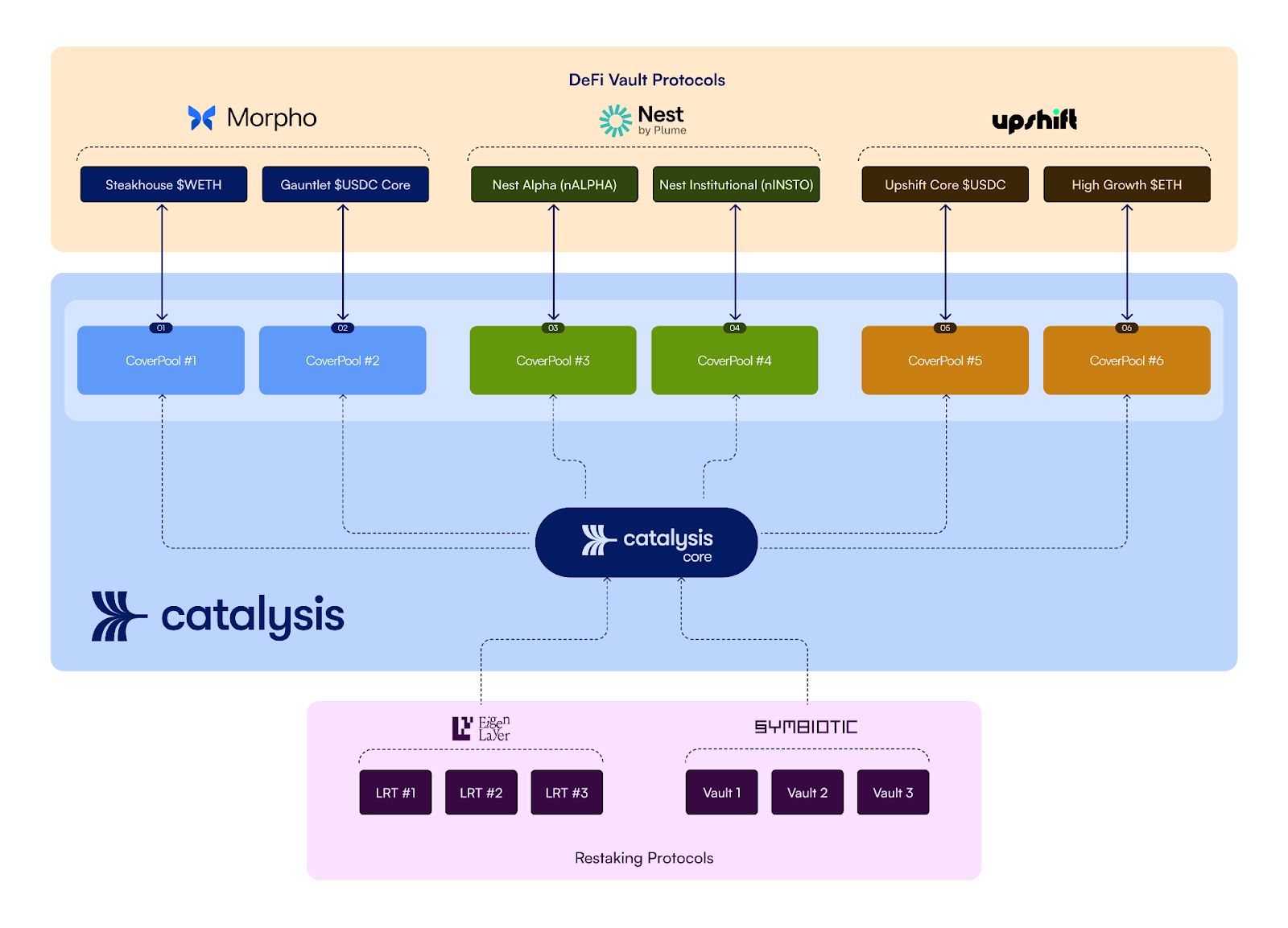
Catalysis uses restaked ETH via EigenLayer to back real economic risk across top DeFi vaults, starting with a WETH vault curated on Morpho with approximately $10M in coverage at initiation. The coverage spans vault-level risks including smart contract vulnerabilities, curator strategy risk, asset depeg, and bad debt.
Coverage terms and payouts are enforced entirely by smart contracts, with no manual intervention or committee discretion. Restakers earn real yield from premiums paid by users who want protected exposure to DeFi.
As the first AVS bringing risk coverage onto restaking rails, this is the kind of infrastructure that makes the difference between experimental allocation and serious deployment.
Why real-time monitoring matters here
Catalysis is handling restaked capital, automated slashing, and programmatic claims settlement across multiple smart contracts. That's a lot of surface area, and the consequences of a missed threat are immediate and financial.
Audits verify code at a point in time. But smart contracts don't stop evolving after deployment. New integrations, parameter changes, and market dynamics create fresh attack vectors continuously. Guardrail fills the gap between that initial audit and the ongoing reality of live contracts.
What we're monitoring for Catalysis
Catalysis moves restaked capital through CoverPools, issues onchain coverage to DeFi vaults, and settles claims through programmatic slashing. Each step is a smart contract interaction that needs continuous oversight.
Guardrail is configured for how Catalysis actually works: catching unexpected collateral drops in CoverPools before they impact coverage capacity, ensuring slashing settles correctly so covered depositors are compensated as intended, flagging unauthorized admin activity before it escalates, and detecting unusual behavior across restakers, curators, and vault depositors before it becomes an issue.
When a threat is detected, we don't just send an alert. We can automatically pause contracts or trigger incident response workflows in real time.
This isn't generic monitoring layered on top. It's built around the risks that actually matter for onchain coverage infrastructure.
What this means for the ecosystem
Catalysis is building for a future where institutional capital flows into DeFi with confidence. That confidence depends on security infrastructure that matches the sophistication of the financial infrastructure it protects.
This partnership reflects a shared belief: protocols built for institutions need security that operates at the same standard.
Continuous, automated, and always on. We're looking forward to supporting Catalysis as they scale toward mainnet and beyond.
Learn more about Catalysis: https://catalysis.network
Get started with Guardrail: https://www.guardrail.ai/get-started